

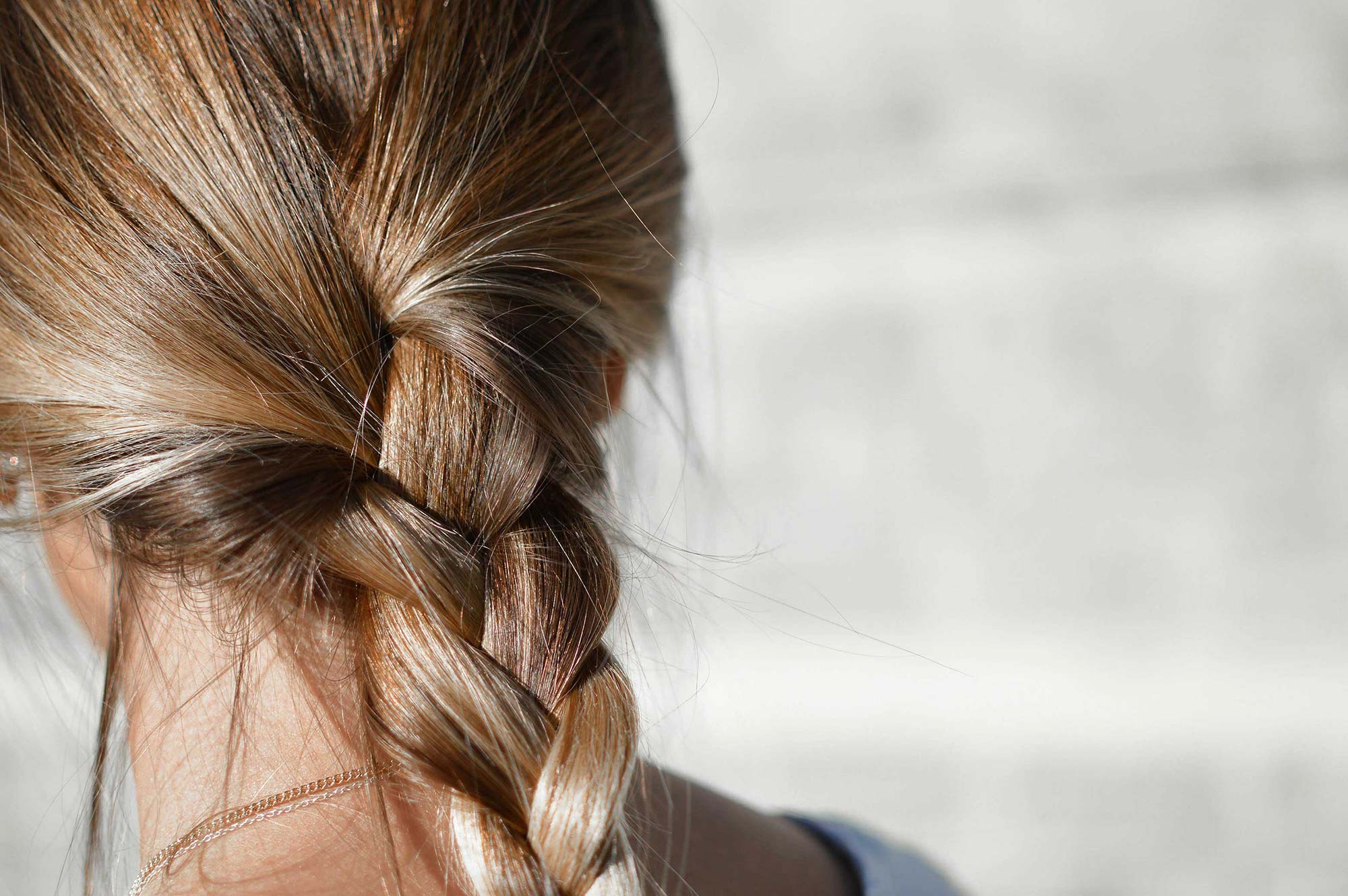
Rosemary water for hair growth: recipe, how to use it and tips
Rosemary is a Mediterranean aromatic herb that has been used since ancient times, notably by the Egyptians, Greeks and Romans. Widely used in cooking to flavour our dishes, it is also often cited as an ally for beautiful hair. Easy to make and inexpensive, rosemary water is a simple natural tip to add to your hair care routine.
In this article, find out how to make your own rosemary water in just a few minutes and how to use it. We will then look at how hair grows, why growth sometimes slows down, and how to build a complete routine to take care of it.
Why use rosemary for hair growth?
Rosemary is known for stimulating blood circulation in the scalp, helping to create an environment more favourable to hair growth. It is also known for its antioxidant properties, which help protect hair follicles against certain environmental damage.
Applied to the scalp, rosemary water also provides a pleasant feeling of freshness every day. It does not replace treatment when hair loss has a medical cause, but it fits easily into a natural, regular routine.
Rosemary water recipe
Ingredients
- 4 to 5 sprigs of fresh rosemary (or dried rosemary)
- ½ litre of water
Method
- Bring ½ litre of water to the boil in a saucepan.
- Add the rosemary to the boiling water.
- Turn off the heat and leave to infuse for 30 minutes.
- Let the mixture cool to room temperature.
- Once cooled, strain the liquid to remove the pieces of rosemary.
- Pour the rosemary water into a clean spray bottle.
How to use rosemary water
Apply the mixture to the roots of your hair every day. Then gently massage your scalp with your fingertips or a massage brush, using small circular movements without rubbing too hard.
You can keep this water in the fridge for up to two weeks.
The secret is consistency: a simple routine you stick to over time is better than a pile of demanding steps.
Understanding the hair life cycle
Each hair grows from a hair follicle and follows a hair cycle made up of three phases:
- Anagen phase: the active growth phase. The hair grows for several years.
- Catagen phase: a short transition phase during which growth stops.
- Telogen phase: a resting phase followed by shedding, before a new hair starts a new cycle.
When too many hairs enter the telogen phase prematurely, hair looks less dense. This is known as telogen effluvium, which can be linked to stress, a deficiency, a high fever or a major life event. In many cases, growth resumes once the cause has been identified and addressed.
Why is your hair falling out or growing more slowly?
Hair growth depends on several factors: the condition of the scalp, the hair cycle, hormonal balance, diet, stress levels and daily habits.
Normal or excessive hair loss?
It is normal to lose hair every day: losing up to around 100 hairs a day is generally considered physiological. If you notice significant shedding in the shower, on your pillow or when brushing, or a widening parting, it is best to look into it quickly.
- Diffuse hair loss: the loss is spread across the whole scalp.
- Localised hair loss: certain areas become thinner (temples, crown or patches).
- Temporary hair loss: common after stress, childbirth, illness or a change of season.
- Persistent hair loss: it lasts for several months and often requires medical advice.
Hormonal factors
Androgenetic alopecia is one of the most common causes of hair loss, in both men and women. It is linked to a genetic sensitivity of the follicles to androgens. Over time, hair becomes finer, shorter and less abundant. In men, hair loss is often concentrated at the temples and crown; in women, it tends to be more diffuse.
In women, other periods of hormonal change can also affect hair growth: after childbirth, stopping or changing contraception, and menopause.
Stress, fatigue and life events
Severe stress, intense fatigue, an infection or surgery can trigger hair loss that appears a few weeks to a few months later. The follicles then move into the telogen phase more quickly: this is telogen effluvium, which is often temporary.
Nutritional deficiencies
Hair is sensitive to the quality of your nutritional intake. Insufficient intake of protein, iron or zinc, for example, can weaken the hair fibre and slow down growth.
Chemical and mechanical damage
Hair can also be weakened by certain habits: repeated colouring and straightening, hairstyles that are too tight, frequent use of heated styling tools, harsh brushing or overly stripping shampoos.
Medical causes
Certain medical causes can explain persistent hair loss: thyroid disorders, autoimmune conditions such as alopecia areata, significant deficiencies, or scalp infections such as ringworm. These situations require medical advice (see below: when to see a doctor).
If your hair loss tends to be seasonal, also read our tips for tackling seasonal hair loss.
Beyond rosemary water: a complete routine for hair growth
Rosemary water is all the more worthwhile when it is part of an overall routine: a balanced diet, gentle care, regular massages and, if needed, targeted food supplements.
A diet that nourishes your hair
Hair is mainly made of keratin, so it is essential to get enough protein. Other nutrients often highlighted for hair include iron, zinc, biotin (vitamin B7), the other B vitamins and omega-3s.
Foods to favour include: eggs, oily fish, seafood, lean meat, dairy products, lentils, chickpeas, seeds, nuts, green vegetables and whole grains.
Food supplements as a course
When diet alone is not enough, or during periods of fatigue, stress or seasonal change, food supplements can complement your routine. The idea is not to promise miracle results, but to support your hair over time with a regular course of at least 3 months. Consistency remains key.
At Lashilé Beauty, a French nutricosmetics laboratory, Good Hair gummies fit easily into your daily life: an enjoyable moment that turns your course into a beauty ritual. Our formulas are made in France, clean and vegan, gluten-free and gelatine-free.
- Discover Good Hair gummies for hair growth & beauty
- Discover Good Hair Women anti-hair loss gummies
- Discover Good Hair Men, the formula designed for men
- Discover the Hair Growth & Anti-Hair Loss Pack
- Discover the full Good Hair range
Gentle care and regular massages
External care helps maintain a balanced scalp and limit breakage. Choose gentle shampoos suited to your scalp and avoid overly harsh washing.
Scalp massage is a simple way to stimulate microcirculation. A few minutes is enough, with your fingertips or a massage brush: it is the perfect complement to applying rosemary water.
When should you see a doctor about hair loss?
Rosemary water and a good routine are no substitute for medical advice. See your doctor or a dermatologist if:
- your hair loss has lasted for several weeks or months;
- you are visibly losing more hair than before;
- localised bald patches appear;
- your scalp shows redness, flaking, pain or itching;
- the hair loss occurs after a hormonal change or a health problem.
The healthcare professional can carry out a clinical examination and, if necessary, order a blood test. The earlier the cause is identified, the more likely it is that the treatment will be well suited.
Our hair growth routine in a nutshell
- Apply rosemary water to the roots, then massage the scalp.
- Eat a diet rich in protein, iron, zinc, B vitamins and omega-3s.
- Follow a regular course of suitable food supplements.
- Choose gentle care products for the scalp and hair fibre.
- Protect your hair every day and look after your lifestyle.
- See a doctor if hair loss persists or gets worse.
Want to go further? Discover the full Good Hair range and also read our tips for growing your hair faster.
Je craque !
Pack Hair Women Anti-hair loss and Hair
Anti-hair loss and hair growth duo - 1 month
Good Hair Vitamins - 3 months
Hair growth and fortification - 3 months
Good Hair Women Anti-hair loss - 3 months
Anti-hair loss for women - 3 months
Mega Hair Pack - Growth and Anti-Hair Loss
Growth and Anti-Hair Loss
Read more
Hyaluronic acid is a molecule naturally present in the body. Retaining up to a thousand times its weight in water, hyaluronic acid acts like a sponge: it captures water and keeps it in the deeper l...
Our energy, well-being and external beauty are determined by what we consume. Indeed, the foods we eat on a daily basis play a crucial role in the radiance, purity and hydration of our skin. Adopti...